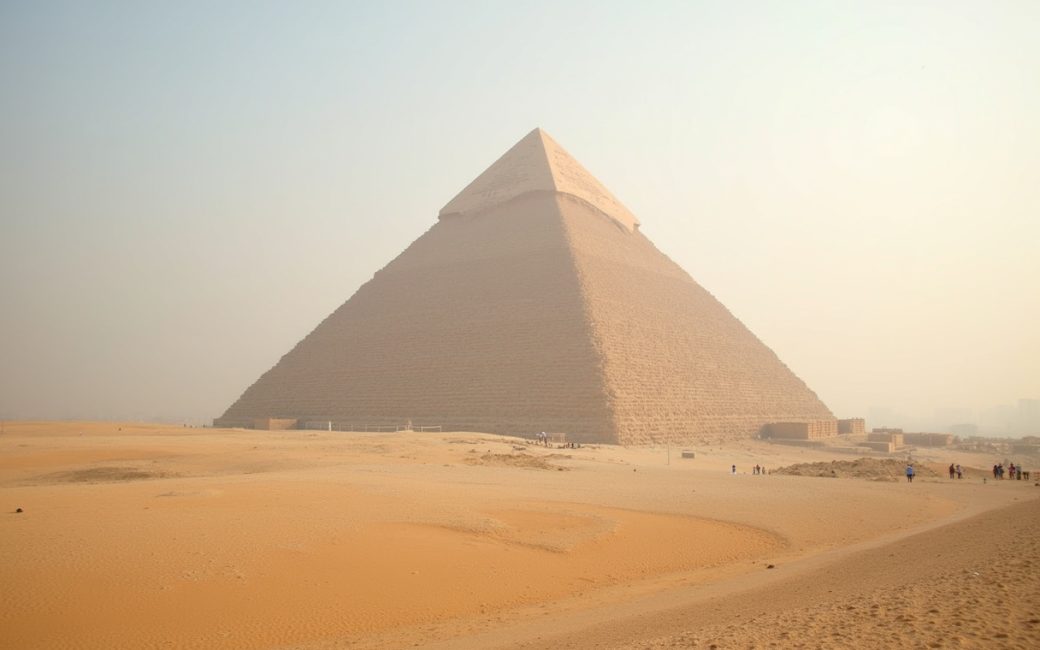
Giza sits far from central Cairo and traffic is heavy
Giza is not a quick detour from downtown Cairo — it sits on the western edge of the metropolitan area, and the roads connecting the two can turn a 20-minute drive into well over an hour once the morning rush builds. Visitors who leave their hotel at 9 or 10am, expecting a short hop to the plateau, instead arrive during the busiest stretch of the day, when tour buses are unloading and the open desert has already lost its early-morning cool.
The fix is arrival timing rather than route planning. Getting to the plateau at or near opening time — before the bulk of coach groups and the harshest midday sun — is the difference between walking the complex at a comfortable pace and being funnelled through it in a crowd. Basing the pyramid day at a hotel near Giza itself, rather than commuting from downtown, also makes it realistic to pair the pyramids with the Grand Egyptian Museum, which sits close enough to the plateau to fold into the same morning without a second long transfer. Treated this way, the single most-visited sight in the city stops eating an entire day and becomes one efficient block of time, leaving the afternoon free for something else on the list.
Getting around Cairo for the rest of the day usually comes down to three options, and they trade off cost against convenience:
| Option | Typical use case | Trade-off |
|---|---|---|
| Metro | Fixed downtown routes, avoiding surface traffic | Cheapest, but limited near Giza and Islamic Cairo |
| Ride-hailing app | Point-to-point, metered fare shown before pickup | Convenient and low-hassle, but still subject to traffic delays |
| Hired driver for the day | Multi-stop days (Giza, Coptic Cairo, Islamic Cairo in sequence) | Costs more per day but removes negotiation and routing stress entirely |
For a single-site day, the metro or a ride-hailing app covers it. For a day that strings together several sights across the city, a driver hired for the day is usually the more practical choice, even though it costs more up front.
Major sites attract persistent touts offering camel rides, photos and souvenirs
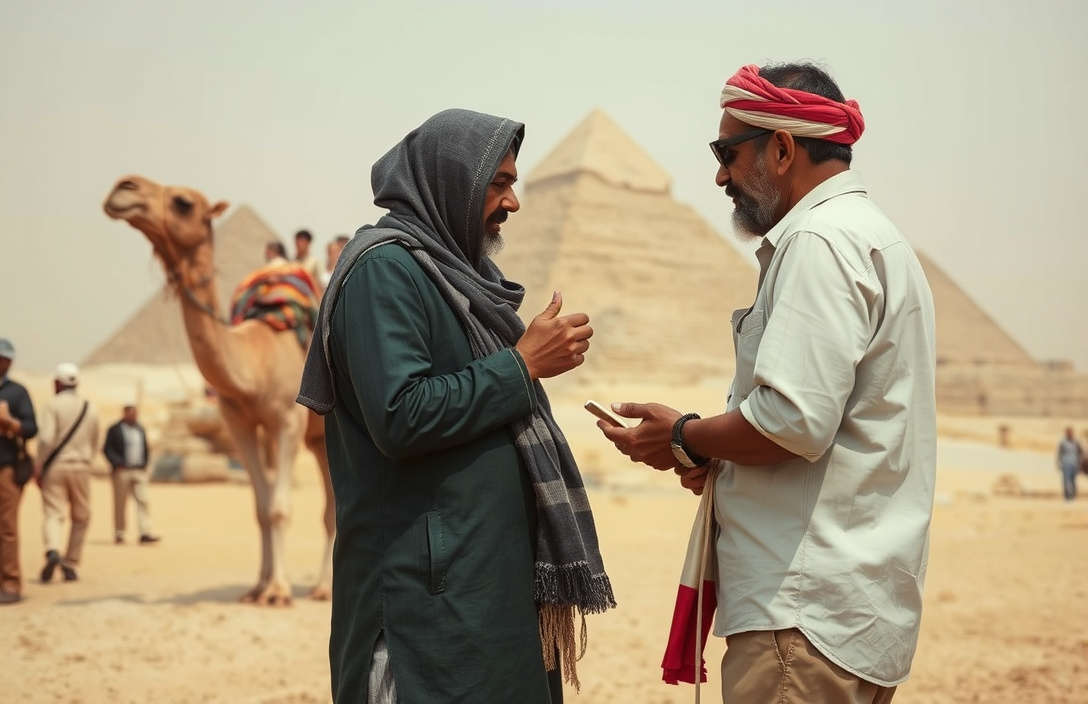
Yes, this is a real and near-constant feature of visiting Giza, the Luxor-adjacent sites, and central Cairo's markets, and it is worth planning for rather than being surprised by. Unprepared visitors describe a steady stream of offers — camel and horse rides, "free" photos that come with a demand for payment afterward, guided detours to a relative's shop — each pitched with confidence and each expecting a decision on the spot.
None of this makes Cairo unusual among cities with major monuments, but it does mean arriving with a plan rather than negotiating in real time. A local guide who sets expectations before you reach the site — what a photo actually costs, whether a camel ride is worth the detour, which stalls are worth stopping at — removes most of the pressure, because the guide, not the visitor, is doing the declining. Carrying small-denomination notes matters just as much: paying for a bottle of water or a tip with a large bill invites a negotiation over change that a visitor with the right notes never has to have. This is an annoyance to budget for, not a safety issue, and treating it as routine rather than alarming is the most useful way to walk into it.
Cairo's collection is split between the old Tahrir museum and the newer Grand Egyptian Museum near Giza
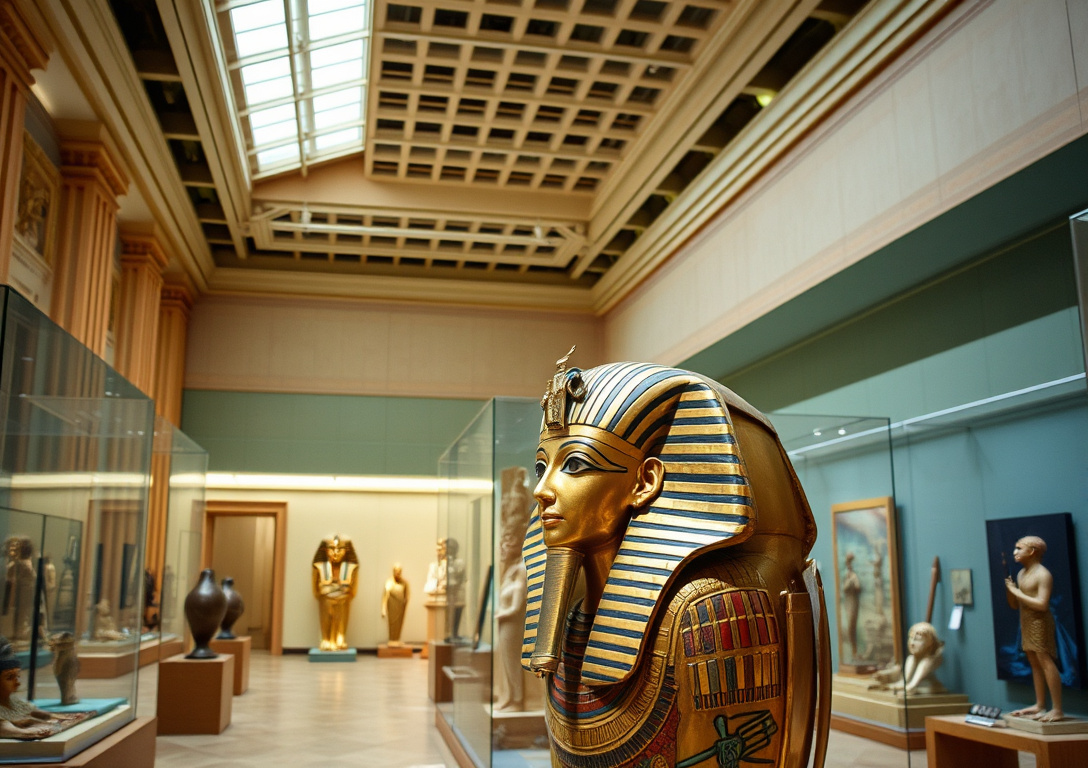
Cairo does not have one Egyptian Museum — it has two, and they hold different parts of the collection. The Egyptian Museum on Tahrir Square is the older downtown institution, dense with sarcophagi, statuary and everyday artefacts across galleries that have changed relatively little over the decades. The Grand Egyptian Museum, near the Giza plateau, is the newer building constructed specifically to house the headline material, including the Tutankhamun collection that has moved out of Tahrir.
The mistake readers make is treating the two as interchangeable, booking whichever one shows up first in a search and assuming the objects they came to see will be there. They should be planned as two separate half-days rather than one museum visit with a different address:
| Egyptian Museum (Tahrir) | Grand Egyptian Museum (Giza) | |
|---|---|---|
| Location | Downtown, Tahrir Square | Near the Giza plateau |
| Collection character | Older, broader antiquities collection | Newer building, holds much of the headline Tutankhamun material |
| Pairs naturally with | A downtown/Islamic Cairo day | A Giza pyramids morning |
| Best treated as | A standalone half-day | Part of the same day as the pyramids |
Checking in advance which museum currently holds the objects on your list — rather than assuming — is the single step that prevents the most common planning error in a Cairo itinerary.
Mosques in Islamic Cairo are working religious buildings
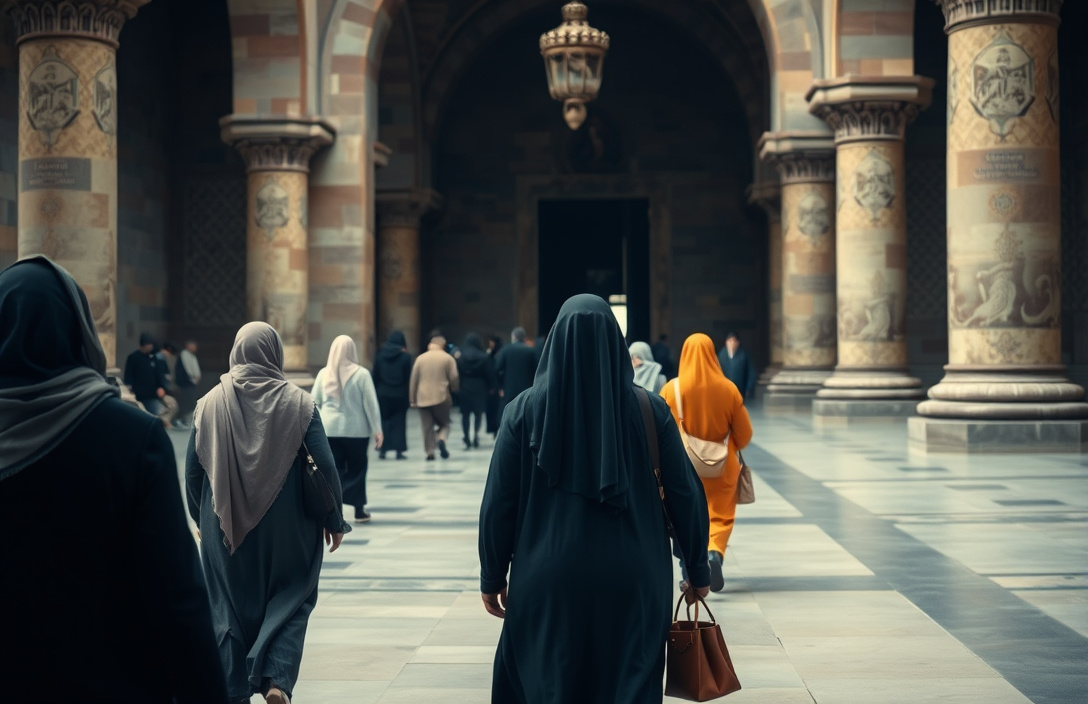
The mosques of Islamic Cairo are active places of worship, not static monuments, and they enforce dress codes accordingly. Visitors who arrive in shorts, sleeveless tops, or without a head covering are routinely turned away at the door or required to rent a cover-up on the spot, which slows down a walking route that is otherwise dense with sites within a short distance of each other.
The practical fix is to dress for the district before setting out, not to improvise at each entrance. Lightweight long trousers or a long skirt, a shirt that covers the shoulders, and a scarf carried in a day bag for anyone who needs to cover their hair mean the mosque and madrasa route can be walked as one continuous loop rather than being interrupted every time a new building's dress standard catches someone out. This is also the district most affected by prayer times: mosques restrict or pause visitor access during the calls to prayer, so building a short buffer into the walking schedule avoids arriving at a closed door mid-route.
Giza Pyramids
The Giza pyramid complex, on Cairo's western edge, is the anchor sight of almost every visit to the city and the reason most itineraries are built around a single early start. Beyond the three main pyramids, the plateau includes the Sphinx and a scatter of smaller tombs and temples that are easy to miss if the visit is rushed. The site rewards the arrival-time discipline described above far more than it rewards any particular route through it — once inside early, before the heat and the coach groups peak, the plateau itself does the work.
Bring water, wear real shoes rather than sandals for the sand and stone underfoot, and expect the sun exposure to be significant with little shade across most of the site — a genuine consideration given how hot Cairo can get outside the cooler months.
Egyptian Museum (Tahrir)
The Tahrir museum is the city's original antiquities collection, housed in a building on Tahrir Square that predates the newer Giza-area museum by decades. Its galleries are organized more by era and object type than by narrative, which rewards visitors willing to browse rather than follow a single fixed path, and it remains one of the densest concentrations of Egyptian antiquities in one downtown building.
Because so much of the collection that once drew crowds specifically to see Tutankhamun's treasures has shifted toward the Grand Egyptian Museum, visitors going to Tahrir specifically for that material should confirm beforehand what remains on display, rather than assuming it is unchanged.
Coptic Cairo
Coptic Cairo is the city's Christian quarter, a walkable cluster of churches, a synagogue and a convent set within and around the remains of a Roman-era fortress. It sits apart from the Islamic Cairo mosque district and from the Giza plateau, which makes it a natural half-day on its own rather than a stop squeezed into a longer route.
The quarter's churches keep their own visiting hours and modest dress expectations similar to the mosque district, so the same long-clothing approach applies here. Walking the area slowly is more rewarding than treating it as a checklist stop, since much of what's worth seeing is in the architecture and layout of the quarter itself rather than in any single building.
Islamic Cairo mosques
Islamic Cairo is the dense historic district north and east of downtown, packed with mosques, madrasas and mausolea built across many centuries of the city's history. It is, after the pyramids, the theme that shows up most consistently across guides to the city, and for good reason — no other district concentrates this much architecture into a walkable area.
Visiting well means combining the dress-code planning above with an honest look at pacing: this is not a district to rush through in an hour between other stops. A half-day, walked slowly with prayer-time buffers built in, does the area far more justice than a quick pass on the way to somewhere else.
Nile River
The Nile runs directly through Cairo, and using it — rather than just looking at it from a bridge — is one of the more distinctive things to do in the city. Felucca sailing, dinner cruises and simple riverside dining are the three common ways visitors engage with the river, and they suit different parts of a trip:
- A hop-on felucca sail works well as a quiet, low-cost late-afternoon activity with no fixed schedule to plan around.
- A dinner cruise suits an evening when the plan is entertainment and a set menu rather than flexibility.
- Riverside restaurants and cafés work as a way to end a long sightseeing day without committing to a boat at all.
None of these require advance booking days out, which makes the river one of the easier pieces of a Cairo itinerary to slot in wherever a gap appears.
Khan el-Khalili bazaar
Khan el-Khalili is the historic market at the edge of Islamic Cairo, and it's the natural stop to pair with a mosque-district afternoon rather than a separate outing. Stalls sell everything from spices and metalwork to textiles and souvenirs, and prices are rarely fixed — the expectation, as with the touts discussed earlier, is negotiation.
The same small-notes preparation that helps at Giza helps here: knowing roughly what you're willing to pay before entering a stall, and carrying change that doesn't force a vendor to break a large bill, keeps the transaction simple. Treat the market as a browsing stop within a longer Islamic Cairo route rather than a destination requiring its own dedicated trip.
Is $100 USD a lot in Egypt?
For a single day of sightseeing in Cairo, $100 covers a genuinely comfortable day rather than a tight one, though it depends heavily on whether a hired guide or driver is part of the plan. Entry fees for the major sites, a couple of taxi or ride-hailing legs, a full day of meals, bottled water and a tip or two for site staff generally come in well under that figure on their own.
Where the budget gets tested is a guide or driver day-rate, which can absorb a large share of $100 by itself if booked independently rather than shared across a small group. A rough one-day allocation looks like this:
| Item | Share of a $100 day |
|---|---|
| Site entry fees (one or two major sights) | Modest, low double-digit dollars |
| Transport (taxi/ride-hailing across the day) | Low double-digit dollars |
| Meals and bottled water | Low double-digit dollars |
| Tips for guides, drivers, site staff | Small, but budgeted in cash, not cards |
| Guide or driver day-rate (if hired solo) | Can consume most of the remaining budget |
The practical adjustment most travelers make, as noted by guides covering Cairo's cost of travel, is sharing a guide or driver across a group rather than booking one alone, which brings the per-person cost down substantially without changing the day's itinerary at all. Carrying enough small notes for tips and market purchases also matters more to how far $100 stretches than the headline entry fees do, since running short on change is what pushes people into overpaying at the point of sale.
On restroom access specifically: public toilets at major sites are inconsistent, and paper is not always provided even where facilities exist. Carrying a small personal supply of tissue or wipes for a full day out at Giza, Islamic Cairo or the museums is standard practical prep, not an overreaction — the same way carrying your own water is, in a climate where site facilities can be sparse between stops.
Is it safe for Americans to go to Cairo right now?
Safety in Cairo is best thought of in three separate layers, rather than as one yes-or-no answer: general street-level safety, the petty-scam risk covered above, and the formal government travel advisory status, which changes independently of daily life on the ground. Confusing these three is where most of the vague "is it safe" answers online go wrong.
Day-to-day, the areas covered in this guide — Giza, downtown, Islamic Cairo, Coptic Cairo — are the same areas covered by every mainstream guide to the city precisely because they are the well-trafficked tourist routes, and the risks visitors actually encounter there are overwhelmingly the tout and pricing pressure described earlier rather than violent crime. The formal advisory picture is separate and worth checking directly rather than taking on trust from any travel blog: government travel advisories are revised on their own schedule, are often specific about which regions they cover, and typically treat border areas and the Sinai interior very differently from Cairo itself. Because these levels change independently of anything written here, the only reliable check is to look up your own country's current official travel advisory for Egypt on the date you're actually booking, rather than relying on a figure or level quoted in an article that may already be out of date by the time it's read.
What doesn't change between updates is the practical layer covered throughout this guide: arrive at Giza early, travel with a guide who manages the touts, dress for the mosque district, carry small notes and your own tissue for long site days, and know which museum holds the collection you're actually going to see. Check the current advisory status for your specific dates before booking, then build the day plans above around whatever window that leaves you.